
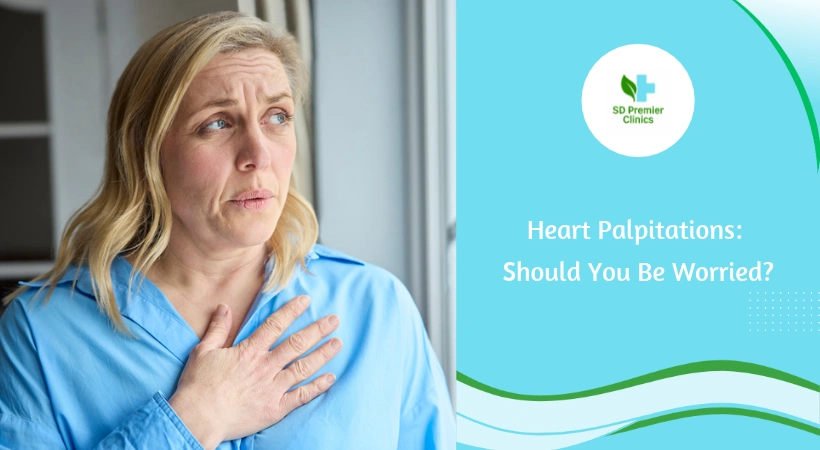
Have you ever suddenly noticed your heart racing, fluttering, pounding, or seeming to skip a beat? It can be unsettling, especially when it happens without warning.
In many cases, heart palpitations are harmless. Stress, caffeine, dehydration, exercise, and lack of sleep can all make you more aware of your heartbeat. However, recurring palpitations can sometimes be related to an abnormal heart rhythm or another medical condition, particularly when they occur with chest pain, fainting, dizziness, or shortness of breath.
What Are Heart Palpitations?
Heart palpitations are the sensation of being unusually aware of your heartbeat. You may notice:
- Racing
- Fluttering
- Pounding
- Skipped beats
- Flip-flopping
- A heartbeat that feels stronger than usual
They can happen during exercise, while resting, after eating, during emotional stress, or while lying in bed at night.
Because palpitations can come and go, they may not occur during a short office visit. At SD Premier Clinics, our board-certified cardiologists provide comprehensive cardiac evaluations and heart rhythm monitoring to help determine what may be causing your symptoms and whether treatment is needed.The American Heart Association notes that palpitations are a symptom rather than a diagnosis and can occur with premature heartbeats or certain heart rhythm disorders.
When Should You Be Worried About Heart Palpitations?
An occasional skipped or extra heartbeat that quickly goes away is often not serious. However, palpitations that last longer, become more frequent, or occur with other symptoms should be evaluated.
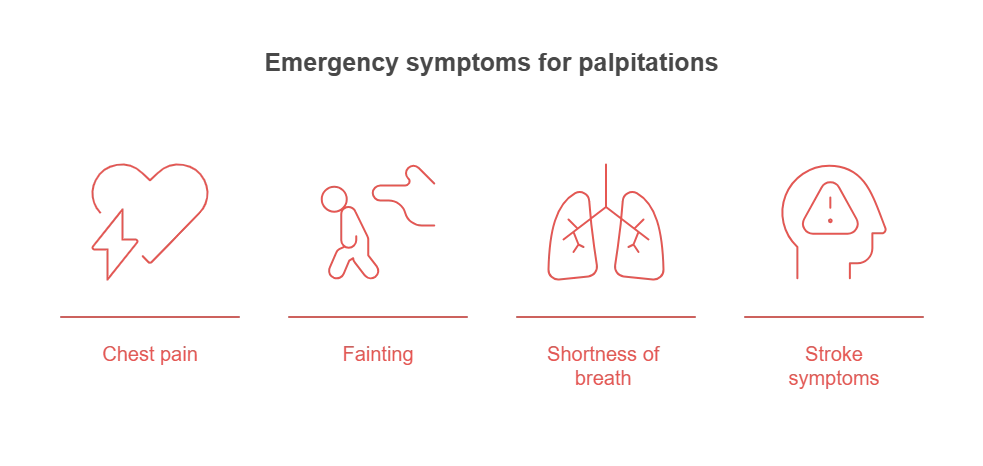
Call 911 or seek emergency medical care if palpitations occur with:
- Chest pain or pressure
- Fainting or loss of consciousness
- Severe shortness of breath
- Sudden weakness, trouble speaking, or other stroke symptoms
Schedule a prompt cardiology evaluation if you experience:
- Frequent or prolonged episodes
- A very fast or irregular heartbeat
- Symptoms that are becoming more frequent or severe
- A personal or family history of heart disease
- New palpitations without an obvious trigger
- New or unexplained dizziness or lightheadedness
Because palpitations can have several possible causes, a cardiac evaluation can help determine whether they are related to a heart rhythm problem or another underlying condition.
What causes heart palpitations?
There is no single cause of palpitations. Sometimes they are linked to everyday triggers, while other cases may involve an underlying medical condition or abnormal heart rhythm.
Common Triggers
Some common triggers include:
- Stress and anxiety
- Caffeine
- Alcohol
- Nicotine
- Dehydration
- Poor sleep
- Certain medications, including some decongestants and asthma medications
- Pregnancy and hormonal changes
- An overactive thyroid
- Electrolyte imbalances
- Exercise or strenuous activity
For example, dehydration can affect fluid and electrolyte levels, while caffeine and nicotine can stimulate the nervous system and temporarily increase heart rate.
Stress and anxiety can also make your heart beat faster or feel more forceful. However, anxiety is not the only possible explanation. Because some heart rhythm disorders can feel similar, recurring or unexplained palpitations should be evaluated rather than automatically attributed to stress.
Heart-Related Causes
Palpitations can sometimes be associated with heart rhythm disorders or other heart conditions, including:
- Atrial fibrillation (AFib): An irregular heart rhythm that can increase the risk of stroke and may require ongoing management.
- Supraventricular tachycardia (SVT): Episodes of a very rapid heartbeat that begin above the heart's lower chambers. Depending on the type and frequency of episodes, treatment may include medication, other therapies, or catheter ablation.
- Premature atrial contractions (PACs) and premature ventricular contractions (PVCs): Early heartbeats that may feel like a skipped or extra beat. Occasional premature beats are common and often harmless, but frequent or bothersome symptoms may require evaluation.
- Bradycardia and heart block: Slow heart rhythms or problems with the heart's electrical signals that may cause dizziness, fatigue, fainting, or other symptoms.
- Tachycardia: A heart rate that is faster than normal and may result from a temporary trigger or an underlying condition.
- Structural heart disease: Problems involving the heart muscle or valves that can sometimes contribute to abnormal heart rhythms.
Since several conditions can cause similar sensations, identifying the underlying cause helps your cardiologist determine whether you need treatment, monitoring, or reassurance.
How Is the Cause Diagnosed?
The first step is understanding what your palpitations feel like, when they occur, and whether anything seems to trigger them. Your cardiologist may ask:
- When did you first notice them?
- How long does each episode last?
- What does your heartbeat feel like?
- What were you doing when it started?
- Do you experience dizziness, chest discomfort, or shortness of breath?
- Do you have a personal or family history of heart disease?
- What medications, supplements, caffeine, or nicotine products do you use?
Keeping a symptom diary can help identify patterns and potential triggers. Record when an episode occurs, how long it lasts, what you were doing at the time, what the heartbeat felt like, and whether you noticed any other symptoms. This information can help your cardiologist determine what testing may be appropriate.
Depending on your symptoms and medical history, your evaluation may include:
- Electrocardiogram (EKG) - An EKG records your heart's electrical activity during the test. It is commonly used to evaluate heart rhythm, but an intermittent palpitation may not occur while the EKG is being performed.
- Holter Monitor - A Holter monitor continuously records your heart rhythm while you go about your normal activities. It can be especially useful when symptoms occur frequently.
- Event or Patch Monitor - When palpitations happen less often, longer-term monitoring can improve the chance of capturing your heart rhythm during an episode.
- Echocardiogram - An Echocardiogram uses ultrasound to evaluate the heart's structure, valves, and pumping function.
- Blood Tests - Blood tests may help identify conditions that can contribute to palpitations, including thyroid problems, electrolyte abnormalities, or anemia.
You may not need every test listed above. Your cardiologist will recommend testing based on your symptoms, medical history, and individual risk factors.
How Are Heart Palpitations Treated?
Treatment depends on what is causing the palpitations. Not everyone with heart palpitations needs treatment. If a temporary trigger is responsible, avoiding or reducing that trigger may be enough. If an arrhythmia or another medical condition is identified, treatment focuses on addressing the underlying cause.
Lifestyle Changes
If everyday triggers are contributing to your symptoms, your provider may recommend:
- Staying well hydrated
- Limiting caffeine and alcohol
- Avoiding tobacco and nicotine
- Getting adequate sleep
- Managing stress
- Taking medications as prescribed and reviewing possible triggers with your provider
Medical Treatment
If testing identifies an underlying condition, treatment may include:
- Adjusting a medication that contributes to palpitations
- Treating thyroid or other medical conditions
- Medication for certain heart rhythm disorders
- Catheter ablation for selected arrhythmias
- Treatment for underlying heart disease
Some people may only need lifestyle changes or monitoring, while others may benefit from medication or a procedure. The appropriate treatment depends on the specific rhythm, underlying cause, symptoms, and overall health.
The Bottom Line
Heart palpitations are common and often harmless, but recurring or worsening symptoms deserve attention, particularly when they occur with chest pain, fainting, dizziness, or shortness of breath.
A cardiac evaluation can help determine whether your symptoms are related to a temporary trigger, an abnormal heart rhythm, or another health condition.
At SD Premier Clinics, our board-certified cardiologists provide comprehensive cardiac evaluations and diagnostic testing, including EKGs, Holter monitoring, event monitoring, and echocardiography. We serve patients throughout National City and the greater San Diego area with personalized cardiac care.
Ready to schedule? Request an appointment with SD Premier Clinics. New patients are typically seen within 1 to 2 weeks.
Frequently Asked Questions About Heart Palpitations
1. Are heart palpitations dangerous?
Most heart palpitations are harmless, but new, frequent, prolonged, or worsening symptoms should be evaluated to rule out an underlying heart rhythm problem or other medical condition.
2. Can stress or anxiety cause heart palpitations?
Yes. Stress can temporarily increase your heart rate and make your heartbeat feel stronger. However, recurring symptoms should not automatically be assumed to be caused by anxiety.
3. When should I worry about heart palpitations?
Seek immediate medical attention if palpitations occur with chest pain, fainting, severe shortness of breath, or other emergency symptoms. Frequent or worsening palpitations should also be evaluated by a cardiologist.
4. Why do I get heart palpitations at night?
Heart palpitations can become more noticeable at night because lying down may make you more aware of your heartbeat. However, frequent nighttime episodes, especially if they last longer or occur with dizziness, chest discomfort, or shortness of breath, should be evaluated.
5. How are heart palpitations treated?
Treatment depends on the cause. Some people only need to avoid triggers or make lifestyle changes, while others may need medication or treatment for an underlying heart rhythm disorder.
More Resources: