
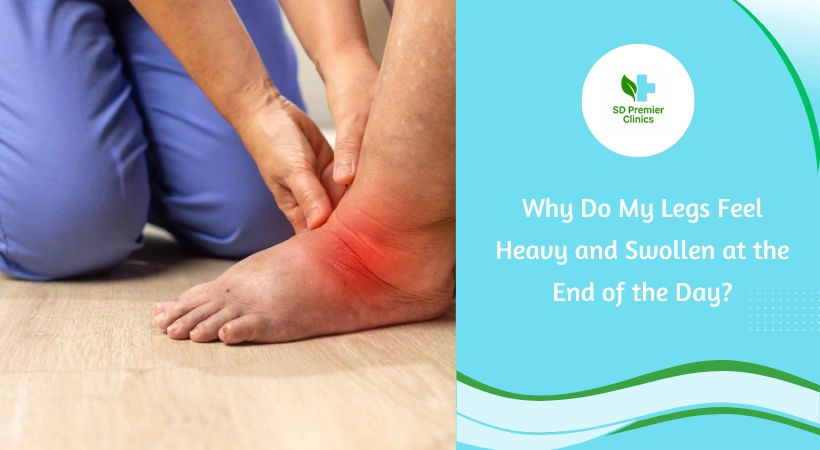
Have your legs ever felt heavy, tired, or swollen after a long day of standing or sitting? Maybe your shoes feel tighter by evening, or your socks leave marks around your ankles. Occasional swelling is common, but swelling that keeps coming back or gets worse should not be ignored.
Legs can feel heavy and swollen at the end of the day because standing or sitting for long periods can cause blood and fluid to collect in the lower legs. This is often temporary, but recurring swelling may also be related to chronic venous insufficiency, varicose veins, lymphedema, heart problems, kidney disease, or other medical conditions.
Your leg veins have small one way valves that help keep blood moving in the right direction. When these valves become weak or damaged, blood can collect in the legs. This can increase pressure in the veins and contribute to swelling, aching, heaviness, and fatigue.
At SD Premier Clinics, our vascular specialists evaluate persistent leg swelling and heaviness to help identify the cause and recommend appropriate treatment.
Why Do Legs Feel Heavier and More Swollen at the End of the Day?
Leg heaviness and swelling can become more noticeable later in the day because standing or sitting for long periods can increase pressure in the veins of your lower legs.
Your calf muscles help move blood back toward your heart when you walk. Your vein valves also help prevent blood from flowing backward. When you stay in one position for too long or your vein valves do not work properly, blood can collect in the lower legs. This can contribute to fluid buildup and make your legs feel heavy, tight, achy, or swollen.
Swelling may improve overnight because lying down changes the pressure on your leg veins and allows fluid to move back into circulation.
Common symptoms include:
- Heavy or tired legs
- Aching or throbbing
- Swollen feet or ankles
- Tightness in the legs
- Shoes feeling tighter by evening
- Itching or skin irritation around the ankles
Occasional swelling after a long day may not be serious. However, swelling that happens often, becomes more noticeable, or comes with other symptoms should be evaluated.
Common Causes of Heavy and Swollen Legs
Leg swelling can have many causes. Some are temporary, while others may need medical evaluation or treatment.
Temporary Causes
Leg swelling may occur after:
- Standing or sitting for long periods
- Hot weather
- Pregnancy
- Eating too much sodium
- Minor injuries
- Certain medications
- Being inactive for long periods
Depending on the cause, swelling may improve with movement, taking breaks from sitting or standing, and elevating your legs while resting.
What Different Patterns of Leg Swelling May Mean
Medical Conditions That May Cause Heavy and Swollen Legs
Chronic Venous Insufficiency (CVI)
CVI occurs when the veins in your legs have trouble returning blood to your heart. When the vein valves do not work properly, blood can pool in the legs, increasing pressure and causing swelling, aching, heaviness, and sometimes skin changes.
Varicose Veins
Varicose veins are enlarged, twisted veins that can develop when blood does not move properly through the veins. They may cause aching, heaviness, swelling, or discomfort, especially after standing for a long time.
Varicose veins do not always cause symptoms, but when they are accompanied by aching, heaviness, swelling, or skin changes, an evaluation can help determine whether an underlying vein problem is present.
Lymphedema
Lymphedema occurs when the lymphatic system cannot drain fluid properly. It can cause ongoing swelling, heaviness, or tightness in the affected leg.
Heart Failure
Heart failure can cause fluid to build up in the legs, ankles, and feet. Swelling may occur along with shortness of breath, fatigue, or difficulty breathing when lying down.
Kidney or Liver Disease
Kidney disease and certain liver conditions can also cause the body to retain fluid, which may lead to swelling in the legs and ankles.
Because several conditions can cause similar symptoms, an evaluation can help determine what is actually causing your swelling.
When Should You Be Concerned?
Occasional swelling after sitting, standing, or traveling may improve with rest. But swelling that keeps returning or gets worse should be checked by a healthcare professional.
Schedule an evaluation if you notice:
- Swelling that occurs regularly
- Leg heaviness that affects daily activities
- Increasingly noticeable varicose veins
- Skin changes or discoloration
- Leg pain that does not improve
- Swelling that gradually gets worse
Seek prompt medical attention if you develop sudden swelling in one leg, especially if it is painful, warm, red, or tender.These symptoms can occur with a deep vein thrombosis (DVT), a blood clot in a deep vein.
Call 911 or seek emergency medical care if leg swelling occurs with:
- Chest pain
- Difficulty breathing or sudden shortness of breath
- Fainting or severe dizziness
- Coughing up blood
These symptoms can be signs of a pulmonary embolism or another serious condition requiring immediate treatment. According to the CDC, DVT may cause swelling, pain or tenderness, redness, or warmth in the affected leg.
How Do Doctors Find the Cause of Leg Swelling?
Your evaluation starts with questions about when the swelling began, whether it affects one or both legs, when it gets worse, your medical history, medications, and daily activities. Your provider may also examine your legs for swelling, skin changes, varicose veins, and other signs of vein disease.
Depending on your symptoms, testing may include:
Venous Duplex Ultrasound
If a vein problem is suspected, a venous duplex ultrasound can check blood flow through the veins and look for problems such as venous insufficiency or a blood clot.
Ankle Brachial Index (ABI)
If your provider suspects reduced blood flow through the arteries, an ABI compares blood pressure in your ankle with blood pressure in your arm. It can help identify peripheral artery disease (PAD).
Blood Tests
Blood tests may help look for conditions such as kidney disease, liver disease, thyroid problems, or other causes of swelling.
Cardiac Evaluation
If your symptoms suggest a possible heart condition, your provider may recommend tests such as an electrocardiogram (EKG) or echocardiogram.
You may not need all of these tests. Your provider will recommend testing based on your symptoms, medical history, and examination.
How Are Heavy and Swollen Legs Treated?
Treatment depends on what is causing the swelling.
Lifestyle Changes
Depending on your condition, your provider may recommend:
- Walking regularly
- Taking breaks from prolonged sitting or standing
- Elevating your legs while resting
- Maintaining a healthy weight
- Limiting excess sodium
- Staying adequately hydrated
- Using compression stockings when recommended
Walking activates your calf muscles and can help support blood flow from your legs back toward your heart. Compression may also help some people with venous swelling, but it should be recommended based on your individual health needs.
Medical Treatment
If an underlying condition is found, treatment may focus on that condition. Depending on the cause, this may include treatment for heart, kidney, or liver disease, management of lymphedema, compression therapy, or treatment for venous disease.
Some people with chronic venous insufficiency or symptomatic varicose veins may be candidates for minimally invasive vein procedures. The treatment and recovery time depend on the specific condition and procedure.
The Bottom Line
Heavy or swollen legs at the end of the day are common and can have many causes. Prolonged standing or sitting can temporarily increase swelling, but recurring or worsening symptoms may point to chronic venous insufficiency, varicose veins, lymphedema, or another medical condition.
An evaluation can help determine the underlying cause of your symptoms and whether treatment is needed.At SD Premier Clinics in National City, CA, our vascular specialists provide comprehensive evaluations to identify the cause of leg swelling and heaviness and recommend personalized treatment based on your condition and health needs.
Ready to schedule? Request an appointment with SD Premier Clinics. New patients are typically seen within 1 to 2 weeks.
Frequently Asked Questions About Heavy and Swollen Legs
1. Why do my legs feel heavier at the end of the day?
Standing or sitting for long periods can increase pressure in the veins of your lower legs. If blood does not return efficiently, fluid may build up and cause heaviness and swelling.
2. Can varicose veins cause heavy legs?
Yes. Varicose veins can cause aching, heaviness, swelling, and leg fatigue, particularly after prolonged standing.
3. When should I worry about swollen legs?
Recurring or worsening swelling should be evaluated. Seek emergency care for swelling with chest pain, sudden shortness of breath, fainting, or coughing up blood.
4. Why is one leg swollen but not the other?
One sided leg swelling can have several causes, including venous insufficiency or a deep vein thrombosis (DVT). Sudden swelling with pain, warmth, or redness should be evaluated promptly.
5. Can sitting all day cause swollen legs?
Yes. Sitting for long periods can cause fluid to build up in the lower legs. Taking regular movement breaks and walking can help, but persistent swelling should be evaluated.
More Resources: