
If your doctor recently handed you a referral to a cardiologist, or you have been noticing chest tightness you cannot quite explain, it is natural to have questions. What does a cardiologist actually do? Do you really need one? This guide answers both, clearly and without the medical jargon, so you can feel confident about your next step.
What is a cardiologist?
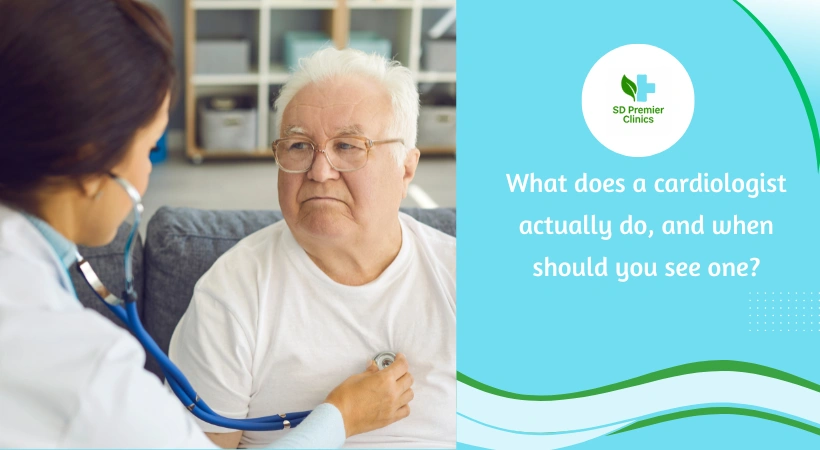
A cardiologist is a doctor who specializes in the heart and blood vessels. Think of them as the expert your primary care doctor calls in when the heart needs closer attention.
Cardiologists diagnose and treat conditions like high blood pressure, irregular heartbeat, heart failure, and blocked arteries. Some cardiologists, called interventional cardiologists, also perform minimally invasive procedures such as stent placements to open blocked arteries. Dr. Prashant Patel is an interventional cardiologist, meaning he can both evaluate and treat complex heart conditions in one place.
One important distinction: a cardiologist is not a heart surgeon. Surgeons perform open procedures like bypass surgery. Cardiologists manage heart health through medication, monitoring, and minimally invasive techniques.
Cardiologist vs. Internist what’s the difference?
Many patients already have an internist or primary care physician they trust. Understanding how a cardiologist fits into that picture can help clarify why a referral is not a cause for alarm.
An internist handles overall health. They manage routine checkups, treat common conditions, and coordinate care across different aspects of your wellbeing. They are often the first to notice warning signs in your heart health.
A cardiologist has deep, specialized training in exactly how the heart and circulatory system work, and what goes wrong when they do not. A helpful way to think about it: your internist sees the whole picture; your cardiologist zooms in on the heart.
Having both does not mean something is seriously wrong. The best outcomes often happen when a primary care doctor and a cardiologist work together. At SD Premier Clinics, we communicate directly with your referring physician so your care stays coordinated and nothing falls through the cracks.
What conditions does a cardiologist treat?
Cardiologists treat a wide range of conditions, from the common to the complex. Here are the ones patients most frequently come in for:
- High blood pressure (hypertension): The most common reason patients are referred to a cardiologist, and one of the most manageable when caught early.
- Irregular heartbeat (arrhythmia or AFib): Often detected by a wearable device or discovered during a routine checkup.
- Chest pain or tightness: This can signal blockages in the arteries supplying the heart and should always be evaluated.
- Heart palpitations: A fluttering, racing, or skipping sensation that may be harmless or may need attention.
- Heart failure: When the heart is not pumping as efficiently as it should, causing fatigue, breathlessness, or swelling.
- Coronary artery disease (CAD): A buildup in the arteries that supply the heart with blood, often developing silently over years.
- Unexplained shortness of breath: Especially when it is worsening or appears during activities that used to feel easy.
When should you see a cardiologist?
This is the question most patients are really asking. Here are the signs that it is time to schedule an evaluation:
- Your primary care doctor has referred you; follow through, even if you feel okay right now.
- You have high blood pressure that is not well controlled with medication.
- You experience chest pain, pressure, or tightness, even briefly or occasionally.
- You feel your heart racing, fluttering, or skipping beats.
- You are short of breath doing activities that used to feel manageable.
- You have a family history of heart disease, heart attacks, or early cardiac death.
- Your wearable device, such as an Apple Watch or Fitbit, has flagged an irregular rhythm alert.
- Your primary care physician noticed some abnormality on your EKG or heard a heart murmur.
- You are preparing for surgery and need cardiac clearance beforehand.
Seeing a cardiologist does not mean something is seriously wrong. It means you are taking your health seriously. Many patients leave their first visit feeling reassured. Others catch a problem early, when it is much easier to treat.
What happens at your first cardiology appointment?
One of the most common reasons patients delay booking is not knowing what to expect. Here is what a first visit actually looks like.
The appointment is a consultation, not a procedure. Your cardiologist will begin by reviewing your medical history, current medications, and the symptoms that brought you in. A physical exam follows, including listening to your heart and checking your blood pressure.
In many cases, you will have an EKG done in-office the same day. It is painless and takes about five minutes. Depending on the findings, your cardiologist may also recommend an echocardiogram or Holter monitor to get a fuller picture of how your heart is functioning.
At SD Premier Clinics, all of these diagnostics are available in-house, so you will not need to visit a separate facility. You will leave with a clear explanation of what was found and a straightforward plan for what comes next. Most new patients in San Diego are seen within one to two weeks, so you will not be left waiting long for answers.
How to find the right cardiologist in San Diego
Not all cardiology practices are the same. When choosing a cardiologist, here are the things worth looking for:
- Board certification: This confirms the cardiologist has met national clinical standards and passed rigorous specialty exams.
- Hospital affiliations: Affiliated cardiologists can coordinate care if inpatient treatment is ever needed.
- Appointment availability: Months-long waits are a real problem in specialty care. Look for practices that see new patients quickly.
- In-house diagnostic capabilities: Having your EKG, echocardiogram, and Holter monitoring done in one location saves time and reduces the chance of results being delayed.
- Clear communication: Your cardiologist should explain findings in plain language, not just hand you a lab result and move on.
At SD Premier Clinics, our board-certified cardiologist brings interventional cardiology expertise with hospital affiliations at UCSD East Campus, Paradise Valley, and Sharp Chula Vista. He takes the time to explain what he finds and what it means for you.
Conclusion
If you have been putting off a cardiology appointment, now is a good time to stop waiting. A first visit is simply a conversation, and it could give you the answers you have been looking for. At SD Premier Clinics in San Diego, Dr. Patel sees new patients within one to two weeks. Getting seen is easier than you think. Request an appointment today.
FAQs (Frequently Asked Questions)
1. Do I need a referral to see a cardiologist?
In many cases, a referral from your primary care doctor is recommended and may be required by your insurance plan. However, you can also call SD Premier Clinics directly to ask about your options.
2. How is a cardiologist different from a cardiac surgeon?
A cardiologist manages heart conditions medically and with minimally invasive procedures. A cardiac surgeon performs open surgical procedures such as bypass surgery. Most heart patients are treated by a cardiologist and never require surgery.
3. What should I bring to my first cardiology appointment?
Bring a list of your current medications, any recent lab results or imaging, your insurance card, and a note of the symptoms you have been experiencing, including when they started and how often they occur.
4. Can I see a cardiologist even if I feel fine?
Yes. Many patients with high blood pressure, early coronary artery disease, or irregular heart rhythms feel completely normal until a problem becomes more serious. If you have risk factors such as a family history of heart disease, a cardiologist can help you stay ahead of them.
5. How long does a cardiology appointment take?
A first visit typically takes 45 minutes to an hour. This includes reviewing your history, a physical exam, and in many cases an in-office EKG. You will have time to ask questions and will not feel rushed.
More Resources: