
For many patients in San Diego, seeing a lung specialist happens later in life, after months of coughing, years of asthma, increasing shortness of breath, or exhaustion that no longer feels “normal.” Sometimes the symptoms seem small at first. Walking upstairs becomes harder. Sleep feels less restful. A cough lingers longer than expected. Breathing changes gradually, which makes it easy to ignore until daily life starts adjusting around it.
A pulmonologist helps patients understand those changes before they become larger problems.
What Is a Pulmonologist?
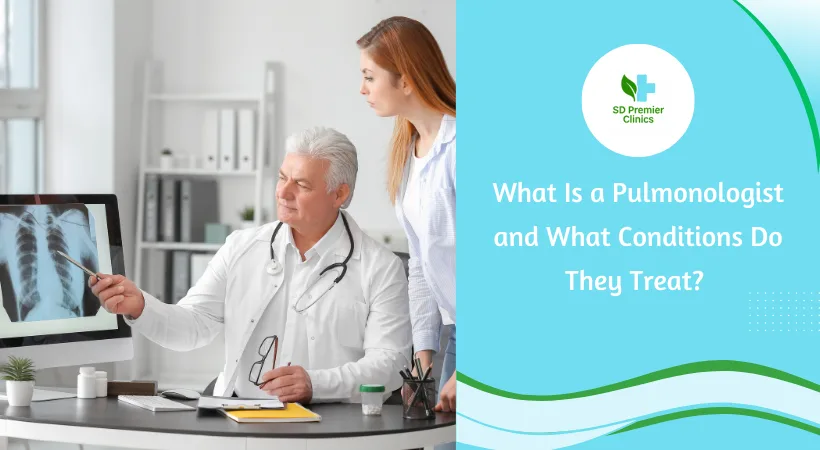
A pulmonologist is a medical specialist focused on the lungs and respiratory system. These physicians diagnose and treat conditions that affect breathing, oxygen flow, and lung function.
After medical school, pulmonologists complete additional training in internal medicine and pulmonary medicine, giving them advanced expertise in both common and complex respiratory conditions. Many also train in critical care medicine, allowing them to manage severe lung-related illnesses in hospital settings.
At SD Premier Clinics, pulmonology care is designed to address not only lung symptoms, but also how breathing problems affect sleep, heart health, energy levels, and daily activities. Patients looking for specialized pulmonary services often benefit from coordinated care between pulmonary and cardiology specialists under one roof.
Is a Pulmonologist the Same as a Pulmonary Doctor?
Yes. The terms “pulmonologist” and “pulmonary doctor” refer to the same type of specialist. Patients may also hear terms like “lung specialist,” “breathing doctor,” or “respiratory specialist.” All describe physicians trained in pulmonary medicine.
The word pulmonary refers to the lungs, while pulmonologist is the formal medical title for the specialist treating lung and breathing conditions.
What Conditions Does a Pulmonologist Treat?
Pulmonologists diagnose and manage a wide range of respiratory conditions, including:
| Conditions | What It Means |
|---|---|
| COPD | Progressive lung disease that makes breathing difficult |
| Asthma | Chronic airway inflammation causing wheezing and chest tightness |
| Sleep Apnea | Interrupted breathing during sleep that affects energy and heart health |
| Chronic Cough | Ongoing cough lasting more than 8 weeks |
| Pulmonary Fibrosis | Scarring of lung tissue that limits oxygen transfer |
| Pulmonary Hypertension | High blood pressure affecting the arteries in the lungs |
| Bronchiectasis | Chronic airway damage leading to infections and mucus buildup |
| Interstitial Lung Disease | Group of inflammatory and scarring lung conditions |
Many of these conditions develop gradually, making symptoms easy to overlook early on. A pulmonologist helps determine whether breathing changes are related to chronic lung disease, sleep disorders, inflammation, infection, or other underlying concerns.
How Is a Pulmonologist Different From a Primary Care Doctor?
Primary care doctors oversee overall health, preventive care, and chronic disease management. A pulmonologist, however, focuses specifically on conditions affecting the lungs and respiratory system.
Often, a primary care physician is the first to notice signs that require further pulmonary evaluation, such as persistent coughing, abnormal chest imaging, recurring respiratory infections, or worsening shortness of breath.
Seeing a pulmonologist does not replace the relationship with your regular doctor. Instead, both physicians work together to provide more complete and coordinated care.
Think of your primary care doctor as the physician managing the entire picture of your health, while the pulmonologist focuses closely on how your lungs and breathing are functioning within that bigger picture.
What Tests Does a Pulmonologist Perform?
Pulmonologists use several diagnostic tools to evaluate breathing and lung function. Common tests include:
- Pulmonary Function Testing (PFT): Measures airflow, lung capacity, and breathing efficiency
- Spirometry: Helps diagnose asthma, COPD, and other obstructive lung conditions
- Chest Imaging: X-rays or CT scans used to identify infection, fluid, or structural changes
- Home Sleep Studies: Evaluates possible sleep apnea from the comfort of home
- Oxygen Monitoring: Measures oxygen levels in the blood
Meet SD Premier's pulmonology team
Our board-certified pulmonologists focus on clear communication and building practical plans that fit your real life.
When Should You See a Pulmonologist?
Consider seeing a pulmonologist if you experience:
- A cough lasting more than 8 weeks
- Shortness of breath during normal activities
- Asthma symptoms that are worsening
- Heavy snoring or ongoing daytime fatigue
- Frequent respiratory infections
- A history of smoking with breathing changes
- Persistent wheezing or chest tightness
Seeing a pulmonologist does not necessarily mean something serious is wrong. In many cases, patients leave their first appointment with reassurance, a clearer understanding of their symptoms, and a treatment plan designed to improve breathing and quality of life.
If you experience sudden severe shortness of breath, chest pain, or bluish lips or fingertips, seek emergency medical care immediately.
Specialized Pulmonary Care at SD Premier Clinics
If breathing feels harder than it used to, your cough never fully goes away, or fatigue is starting to affect your everyday routine, your lungs may be asking for more attention than you realize. At SD Premier Clinics, Dr. Brian Tabila and Dr. Rosemarie Lim provide thoughtful, personalized pulmonary care focused on helping you find answers, improve your breathing, and feel more confident about your health.
Request an appointment today to take the next step toward clearer breathing and better daily comfort.
Frequently Asked Questions About Pulmonology Care
1. Can a pulmonologist treat sleep apnea?
Yes. Pulmonologists commonly diagnose and manage sleep apnea and other sleep-related breathing disorders.
2. Do pulmonologists treat smokers only?
No. Pulmonologists treat many conditions unrelated to smoking, including asthma, sleep apnea, and chronic cough.
3. What happens during a first pulmonology visit?
Your pulmonologist will review your symptoms, medical history, and breathing concerns and may recommend lung function testing or imaging.
4. Can breathing problems affect heart health?
Yes. Conditions like sleep apnea and pulmonary hypertension can directly impact heart function and circulation.
5. Are pulmonary function tests painful?
No. Pulmonary function tests are non-invasive and involve breathing into a machine that measures lung performance.
More Resources:
Tags: