


What Is a Holter Monitor?
A Holter monitor is a portable device that continuously records your heart's electrical activity for 24 to 48 hours during normal daily activities. The ambulatory EKG monitoring captures irregular rhythms that may not appear during a standard office visit. After the monitoring period, Dr. Patel reviews the data to guide personalized care.
When Is a Holter Monitor Recommended?
Holter monitoring is ideal for evaluating:
Palpitations or Irregular Heartbeat
Dizziness or Fainting Episodes
Suspected paroxysmal AFib for early detection
Post-event monitoring after cardiac episodes
Device Evaluation and Follow-Up
This test is perfect for patients who experience intermittent symptoms that require continuous heart rhythm assessment.
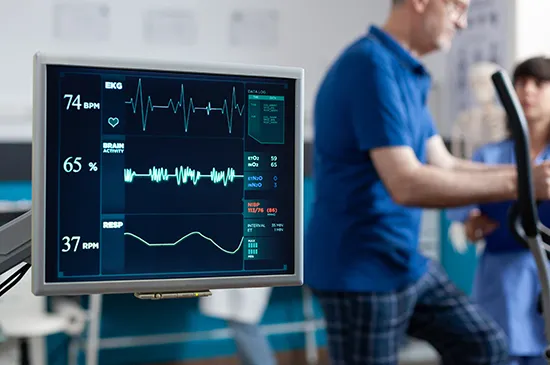
Holter Monitor vs. Cardiac Event Monitor
Holter monitors record your heart continuously for 24 to 48 hours, making them best for frequent or daily symptoms.
Cardiac event monitors, on the other hand, are worn for up to 30 days and activated by the patient when symptoms occur, making them ideal for infrequent episodes. Both devices provide valuable insight, but the right choice depends on your symptom frequency and diagnostic needs.
Why Choose SD Premier Clinics for Holter Monitoring?
At SD Premier Clinics, we make heart rhythm monitoring simple, accurate, and patient-focused:
Fast Access
In-office fitting with quick follow-up.
Personalized Review
Our board-certified providers interpret your results directly.
Evidence-Based Approach
Only the testing you need for your heart health.
Friendly Staff
Real people answer your questions and guide you.
Comprehensive Heart Care
Preventive, diagnostic, and interventional cardiology under one roof.
Convenient Location
South San Diego clinic with free parking.
Understand Your Heart Rhythm with Holter Monitoring
Capture hidden rhythm changes with continuous monitoring that works with your daily routine.
FAQs
Lightweight and portable, worn comfortably under clothing while you go about daily activities.
Dr. Patel reviews your recordings at follow-up, typically within a few days.
Yes, it can identify paroxysmal AFib and other irregular heart rhythms.
Most major insurance plans, including Medicare, are accepted. Coverage verification is available prior to your appointment.
Unlike a standard EKG that records a few minutes, a Holter monitor captures 24–48 hours of continuous heart activity for more accurate detection of intermittent symptoms.