


What Is Hypertension (High Blood Pressure)?
Hypertension occurs when the force of blood inside your arteries is consistently too high. Often called the “silent killer,” hypertension affects 1 in 3 adults and can quietly damage the heart, kidneys, and other organs if left untreated.
Signs & Symptoms of High Blood Pressure
Many patients with high blood pressure have no noticeable symptoms. Some may experience:
Occasional Headaches or Dizziness
Visual Disturbances or Nosebleeds
(in very high BP)
Shortness of Breath or Fatigue
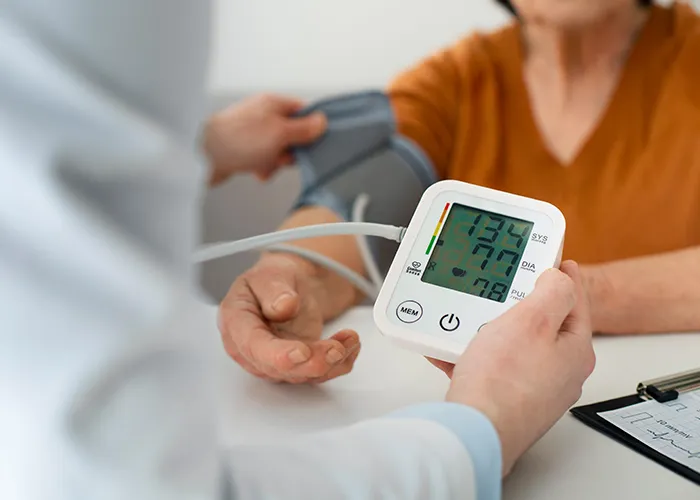
Causes and Risk Factors for Hypertension
- Primary (90-95%): Combination of genetics and lifestyle factors
- Secondary (5-10%): Kidney disease, hormonal disorders, sleep apnea
- Risk Factors: Age, family history, high sodium intake, obesity, inactivity, smoking, alcohol, and chronic stress
How We Evaluate and Manage High Blood Pressure
Our hypertension specialists provide a thorough cardiovascular assessment beyond a single blood pressure reading:
Diagnostic Tests
EKG, echocardiogram if indicated
Treatment
Lifestyle counselling, medication optimisation, regular monitoring
Follow-Up
Ongoing evaluation to ensure blood pressure is controlled and cardiovascular risk minimized
Why Choose SD Premier Clinics for Hypertension Care?
We provide expert heart care with a focus on precision, prevention, and long-term wellness.
Timely Access
Quick evaluation and follow-up appointments
Comprehensive Care
Managing blood pressure and overall cardiovascular risk
Evidence-Based Treatment
Proven strategies for safe and effective blood pressure control
Personalized Approach
Treatment tailored to your health profile and lifestyle
Supportive Team
Guidance and education at every step of your care
Convenient Location
Easy access with free parking in South San Diego
Start Managing Your Blood Pressure with Confidence
Stay ahead of complications and protect your heart with expert evaluation and ongoing hypertension management.
FAQs
Stage 1: ≥130/80 mmHg, Stage 2: ≥140/90 mmHg.
Yes, most patients are asymptomatic until complications arise.
For someone with no prior history, BP should be checked at least every 3-6 months or as advised by your cardiologist. For someone, who is already diagnosed with HTN, we recommend checking it much more frequently.
Yes, diet, exercise, limiting alcohol, and quitting smoking help significantly.
Not always, depending on stage, risk factors, and cardiovascular health.
Yes, most medically necessary tests and visits are covered.
Our expert providers will review medications, lifestyle, and possible secondary causes.